
Types of Emails for Your Email marketing

A lot of small business owners think the most important emails to send are promotional emails. It makes sense, right? Since that is the email that directly talks about sales.
But is that right, though?
The hard truth is that while promotional emails have their place, automated emails are actually the gold mine, not the regular promotional campaign.
So, what are automated emails? They’re also known as “Triggered Emails,” and they are exactly what they sound like: emails sent automatically based on something a user does (or doesn’t do). This could be signing up for a form, buying a product, or even leaving something in their shopping cart.
Unlike a promotional blast that goes to everyone, these emails are far more targeted. They build interaction slowly, warming up your audience and guiding them to the point of sales. It’s a relationship, not a one-time shout.
If you’re not convinced, just check out these statistics from Omnisend:
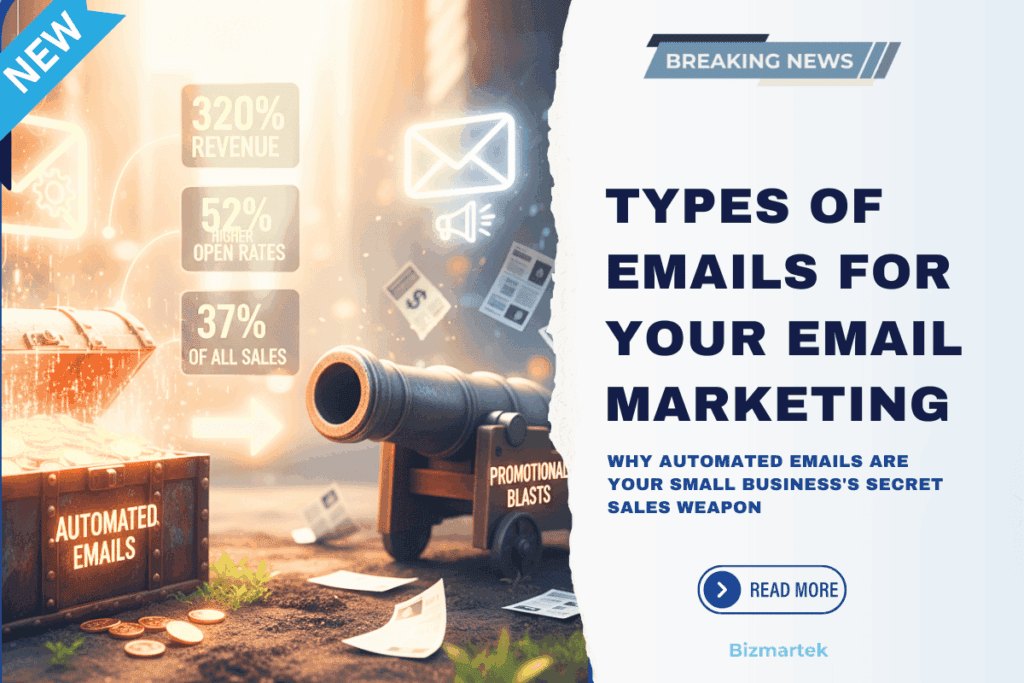
Revenue: Automated emails generate 320% more revenue than non-automated (manual campaign) emails.
Conversion: They drive 37% of all email-generated sales despite making up only roughly 2% of total email volume.
Engagement: Automated emails see roughly 52% higher open rates and a massive 332% higher click rates than standard promotional emails.
(Source: Omnisend, 2025 Marketing Statistics Report)
The sweetest part is that these emails don’t need you to manually click the “send” button every time. Once you set them up, that’s it. They run automatically. They are making sales for you, building relationships, and keeping customers engaged 24/7, even while you’re sleeping or busy with other parts of your business.
So, let’s talk about the different types of automated emails to use for your business.
You can also check out our guide to learn more about email marketing and how to get started for your business.

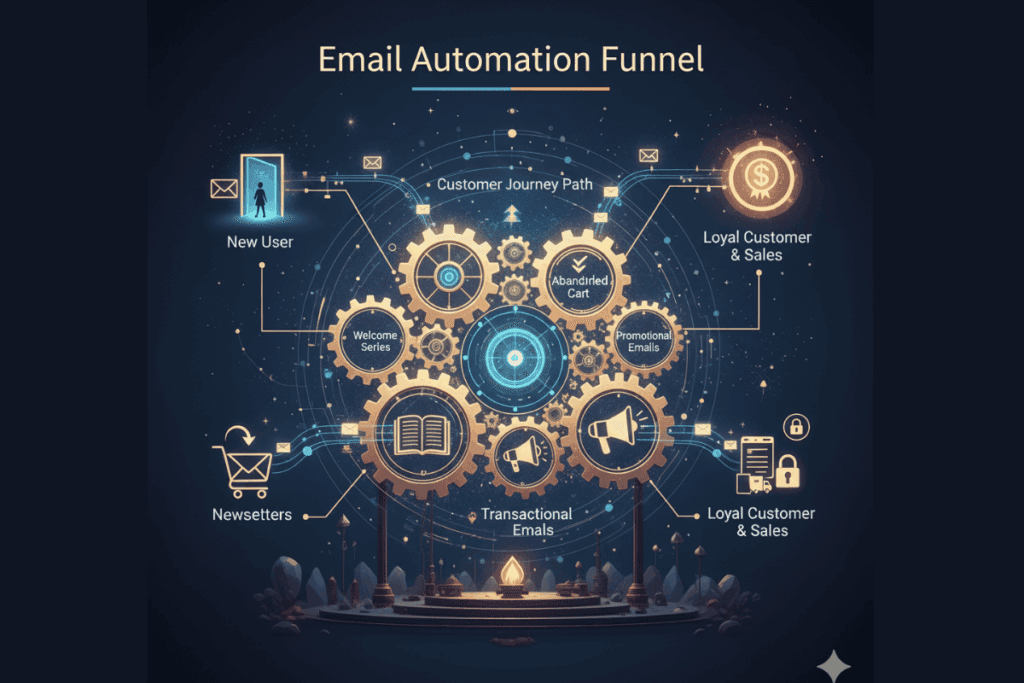
1. Welcome Emails
This is the big one, and it’s non-negotiable. When people fill out a form on your site or sign up for your list, you must follow up immediately with a welcome email. Don’t wait. That first moment is when they are most engaged and interested in you. A welcome email confirms they’re in the right place, delivers any lead magnet you promised, and sets the tone for your relationship.
But don’t just stop at one email. You should also send dedicated emails when users move to the next stage of your sales funnel. Think about their journey. For example, you can send another email after you have a call with a prospect and add them to your “qualified prospect” list. This email can recap your call and outline the next steps. Or, after they finally purchased, you can trigger a “post-purchase” welcome series that thanks them, helps them get started with their product, and makes them feel great about their decision.
2. Abandoned Cart Series (for E-commerce Websites)
If you run an e-commerce website, this one is pure, uncut revenue waiting to be collected. It’s that simple. People add products to their cart and then… poof. They vanish. They get distracted, the dog barks, they second-guess the price, or their boss walks in.
An abandoned cart series automatically follows up with them. It’s not pushy; it’s a helpful reminder. You can set up a series of 2-3 emails.
Email 1 (maybe 1-2 hours later): “Hey, did you forget something?” This email just shows them what they left behind and gives them an easy link to get back to their cart.
Email 2 (maybe 24 hours later): “Still thinking it over?” This is where you can remind them of your great return policy, answer common questions, or show a customer review for that specific product.
Email 3 (maybe 48-72 hours later): This is the final nudge. Some people offer a small incentive here, like “Complete your purchase today and get 10% off,” but you have to test what works for your profit margins.
This single automation can recover a shocking amount of lost sales. Setting this up is a no-brainer.
3. Newsletters (The “Stay in Touch” Emails)
Okay, “newsletter” can sound boring, but it’s just about staying in touch regularly. This is how you build a long-term relationship and stop people from forgetting you exist. The key is to provide value, not just sell, sell, sell.
You can automate parts of this or at least have a consistent schedule. Think about:
Blog post teasers: Every time you post a new blog, have an email automatically send a short teaser and a link to your list.
Monthly round-ups: At the end of every month, send an automated email that rounds up your best content, news, or company updates.
Weekly tips: Send one quick, valuable tip every single week. Make it useful, make it fast, and make it consistent.
This keeps you top-of-mind, so when they are ready to buy, you’re the first person they think of.
4. Promotional Emails
These are the emails you were probably thinking of first: seasonal deals, special discounts, Black Friday sales, new product launches, etc. They are still super important. This is how you drive big bursts of sales.
But here’s the secret: they work so much better when you’ve already been sending welcome emails, newsletters, and other value-based content. Your audience will be “warmed up.” They won’t just see you as someone who only shows up to ask for money.
5. Transactional Emails
These are the most “boring” but most essential and most-opened emails you will ever send. These are automated emails triggered by a specific transaction.
Order confirmations
Shipping notifications
Password resets
Receipts and invoices
You must have these. They provide peace of mind and are a core part of your customer service. And while they are functional, you can still inject your brand’s personality into them. Don’t let them be plain text. Add your logo, link to your help center, or even offer a small “thank you” discount for their next purchase.
Conclusion:
So, Does This Mean Traditional Promotional Email Campaigns Don’t Work?
No. Not at all.
They absolutely work. But here’s the best strategy that smart small business owners and digital marketers use: they combine the different types of emails together.
These different types of emails are designed for different purposes.
Welcome & Onboarding emails build trust with new leads.
Abandoned Cart emails recover lost sales.
Newsletters build long-term loyalty and authority.
Transactional emails provide essential customer service.
Promotional emails drive immediate, large-scale revenue.
Once you accept this fact, it becomes so much easier for you to scale. You stop thinking “I need to send an email today” and start building a system that works for you. Your promotional emails will perform better because your automated emails have already done the heavy lifting of building trust and engagement.
That’s how you win at email marketing.

Frequently asked questions – FAQ
Explore EMAIL MARKETING Mastery

Marketing & Lead Nurturing Emails: How to Convert Leads into Loyal Customers
How to Set Up Brevo for Transactional Emails on WordPress Sites

Best Transactional Email Platform for WordPress Sites
Transactional Email: Its Role in Email Marketing
View More EMAIL MARKETING Articles (9 more)
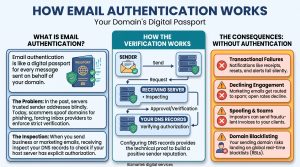
How to Set Up SPF, DKIM and DMARC for WordPress Sites Using cPanel

Email Authentication: Complete DNS Setup Guide for Better Delivery
How Emails Are Sent: A Simple Guide to Email Delivery

How to Start Email Marketing in Nigeria

How to Recover Abandoned Carts in Nigeria 2026
10 Best Email Marketing Software in Nigeria Today

Email Marketing Services for E-commerce Brands in Nigeria
Email Marketing Automation for Real Estate Firms in Nigeria
