
10 Best Email Marketing Software in Nigeria Today

Brevo currently has the most generous permanent free plan for Nigerian businesses: 300 emails a day to unlimited contacts, with automation and a basic CRM included even for free
Kit's free Newsletter plan supports up to 10,000 subscribers, the highest free-tier ceiling on this list, but with only one automation sequence
Naira pricing for paid plans generally runs from about ₦5,000 to ₦41,000 a month depending on the platform and list size, and several platforms gate their "real" automation behind a second or third pricing tier, not the entry plan
Only AWeber connects to Paystack natively; most others need a Zapier-style workaround
Deliverability depends more on your sending practices than which platform you choose, though independent testing shows real, measurable differences between platforms

If you’re comparing email marketing software for a Nigerian business, it helps to know upfront: a lot of “best email marketing provider in Nigeria” content actually reviews agencies that manage campaigns for you, not software you log into yourself. Both are legitimate, but they solve different problems.
Feature: Explore our email marketing services here >>
Everything below is genuine software, tools you set up and run yourself, with real Nigeria-specific pricing and enough feature depth to actually tell them apart, not just a name and a one-line description.
1. Brevo (formerly Sendinblue)
Brevo has the strongest permanent free plan on this list: 300 emails a day (about 9,000 a month) to unlimited contacts, and unlike most competitors, automation isn’t locked behind a paid tier here, the free plan includes full access to the workflow editor and all 12 pre-built automation templates (welcome sequences, abandoned cart, birthday emails, re-engagement flows), plus a basic built-in CRM with deal pipeline tracking.
What makes Brevo genuinely different from the rest of this list is its pricing model: it charges based on emails sent, not contacts stored. For a growing list with predictable sending volume, that structure can save real money compared to platforms that charge more every time your contact count crosses a threshold, whether or not you’re actually emailing all of them. It’s also the only platform here with native email, SMS, WhatsApp, and live chat in one dashboard, workflows can trigger across all four from a single automation, though its SMS routing is built primarily for European carriers, so Nigerian businesses may still want a local SMS provider alongside it for reliable local delivery.
The trade-offs worth knowing: the template library sits around 48 designs, noticeably smaller than Mailchimp’s 130+, and independent deliverability testing shows a real range depending on the source and time period, generally landing somewhere in the high-80s to low-90s percent for inbox placement, solid but not always class-leading. The paid Starter plan runs about ₦41,250 a month for 20,000 sends with no contact cap.
Best for: businesses wanting one platform for email, SMS, WhatsApp, and a basic CRM without stitching together separate tools, and anyone who wants real automation on a free plan that doesn’t expire.
2. MailerLite
MailerLite’s free plan covers up to 1,000 subscribers and 12,000 emails a month, with automation workflows included even on the free tier, something several competitors reserve for paid plans entirely. Where MailerLite earns its reputation is interface speed and simplicity: the drag-and-drop editor loads and responds quickly even on slower connections, a genuine practical advantage for parts of Nigeria with inconsistent internet speeds, and campaigns that would take twenty minutes to assemble in a heavier platform often take five here.
It trades some depth for that simplicity. Segmentation and automation triggers are less sophisticated than Brevo’s or GetResponse’s, built more around straightforward “if this, then that” logic than complex multi-branch journeys, which is a genuine limitation once your campaigns get more advanced, but rarely matters for a small business sending a regular newsletter or promotional sequence.
Best for: small businesses and creators wanting an easy entry point without sacrificing basic automation, especially where team members aren’t especially technical.
3. Mailchimp
Mailchimp remains one of the most recognized platforms globally and is still widely used in Nigeria, largely on reputation and its genuinely deep template library (130+ designs, the largest on this list). Its free plan covers up to 500 contacts, smaller than Brevo or MailerLite’s free tiers, but it pairs that with a built-in CRM, basic reporting, and enough integrations (300+) to connect to nearly any other tool your business already uses.
The catch is pricing escalation: Mailchimp’s per-contact pricing model means costs climb steadily as your list grows, and several genuinely useful features, fine-grained automation, advanced segmentation, are reserved for higher tiers rather than included from the start. Paid plans start around $13/month and scale from there, sometimes steeply once a list passes a few thousand contacts.
Best for: businesses that want the broadest integration ecosystem and the most polished template selection, and don’t mind paying a premium for brand recognition and breadth.
4. GetResponse
GetResponse has evolved well beyond a simple email tool into a genuine all-in-one marketing platform: webinar hosting, a landing page builder with 190+ templates, and “Autofunnel,” a built-in system that chains a landing page, payment processing (via PayPal or Stripe), and follow-up emails into a single sellable funnel without needing separate tools glued together. AI features run through the platform too, an email generator that drafts campaigns from a prompt, and a subject line optimizer that suggests variants based on engagement data.
The important nuance most surface-level reviews skip: GetResponse’s entry Starter plan ($19/month for 1,000 contacts) gives you unlimited email sends but not real automation, multi-branch workflows, advanced segmentation, and the full Autofunnel feature require the Marketer plan at $59/month, a significant jump. E-commerce-specific automation (abandoned cart recovery, purchase-based flows) is gated even further behind the Ecommerce Marketing plan, which starts around $119/month for just 1,000 contacts, enterprise-level pricing for a feature many small stores would want from day one. It connects to Paystack through Zapier rather than natively.
Best for: coaches, educators, and businesses running webinars or funnels alongside email, provided you budget for the Marketer tier rather than assuming the entry plan covers real automation.
5. AWeber
AWeber is the only platform on this list with direct native Paystack integration, a real advantage if you’re selling subscriptions or paid content and want purchase data feeding your automations without extra setup or a Zapier subscription. Its free plan includes up to 500 contacts and 3,000 emails a month, modest compared to Brevo or MailerLite, but functional for testing the platform before committing.
AWeber’s interface feels older than newer competitors, it doesn’t have GetResponse’s funnel-building polish or Brevo’s multi-channel breadth, but what it does have is a long-established sending infrastructure. User reports and G2 usability data suggest this translates into slightly higher inbox placement rates in practice, which matters more than any single feature if your core goal is simply reaching the inbox reliably.
Best for: Nigerian businesses selling through Paystack who want that specific connection to work without extra setup, and who prioritize deliverability over interface polish.
6. Moosend
Moosend offers enterprise-style features, behavioral triggers, granular segmentation, and e-commerce AI tools like product recommendations, at one of the lowest price points on this list, around ₦14,850 a month for smaller lists. That combination, advanced features at a startup-friendly price, is genuinely its strongest pitch.
The trade-off is brand maturity: it typically runs a 30-day free trial rather than a permanent free tier, meaning you need to commit to evaluating it within a fixed window rather than testing indefinitely at no cost, and its support resources and community are smaller than more established names like Mailchimp or GetResponse.
Best for: pre-revenue startups and small online stores wanting advanced, e-commerce-specific features on a tight budget, and who are comfortable evaluating a less mainstream platform.
7. Constant Contact
Constant Contact is built around simplicity: an easy dashboard, hundreds of templates, and support that doesn’t assume technical background. It also leans into event marketing specifically, RSVP tracking and event promotion tools that most competitors don’t build in natively, useful if your business runs workshops, launches, or in-person events alongside regular email.
It doesn’t have the most advanced automation on this list; behavior-based, multi-branch workflows are more limited than Brevo or GetResponse offer, but it’s genuinely one of the fastest platforms to actually get a first campaign out the door on, which matters more than depth if your team has never used email software before.
Best for: non-technical business owners who want to start sending without a learning curve, especially those running events or workshops alongside regular campaigns.
8. Kit (formerly ConvertKit)
Kit’s free Newsletter plan is the most generous free tier on this list by far: up to 10,000 subscribers with unlimited emails, forms, and landing pages, though limited to a single automation sequence, a real constraint once you want more than one welcome flow running. Paid Creator plans start around $39/month for 1,000 subscribers once you need more advanced automation, tagging, and integrations.
What sets Kit apart structurally is its creator-commerce focus: built-in tools for selling digital products, paid newsletter subscriptions, and a creator network for cross-promotion with other Kit users, features aimed squarely at bloggers, course sellers, and newsletter writers rather than general product businesses. If you’re not monetizing directly through content, several of Kit’s signature features go unused.
Best for: solo creators and newsletter-first businesses with large lists but modest automation needs, particularly anyone planning to sell digital products or paid subscriptions directly.
9. Zoho Campaigns
Zoho Campaigns is one of the cheaper full-featured options available, with paid plans starting around $3/month, notably lower than most others on this list. It includes A/B testing, automation, and detailed reporting, respectable depth for the price, and integrates naturally if you’re already using other Zoho business tools (CRM, invoicing, inventory), pulling customer data across tools without separate setup.
The trade-off is that Zoho Campaigns feels most at home as part of the broader Zoho ecosystem rather than as a standalone best-in-class email tool; used alone, its interface and template options feel less refined than dedicated email-first platforms like Brevo or MailerLite.
Best for: businesses already inside the Zoho ecosystem, or anyone prioritising low cost without sacrificing core features and willing to trade some polish for the price.
10. Drip
Drip is built specifically for e-commerce, with behavior-driven automation, abandoned cart recovery, browse abandonment, and personalized product recommendations, baked into the platform’s core rather than bolted on as an add-on feature. Pre-built “playbooks” for common e-commerce scenarios (welcome series, post-purchase follow-up, win-back campaigns) mean you’re customizing an existing framework rather than building automation from a blank canvas.
It’s less general-purpose than the others on this list, there’s no webinar hosting, no creator-commerce tools, no broad CRM, but for a Shopify or WooCommerce-style store specifically, that narrow focus is the point rather than a limitation.
Best for: online stores wanting automation tied directly to shopping behavior from day one, not general-purpose newsletters with e-commerce features added later.
Should You Use Software Alone, or Get Help Managing It?
Software gives you control and the lowest direct cost, but it assumes someone on your team has the time to write copy, build automations, and monitor performance consistently, and increasingly, to navigate feature-gating across pricing tiers to actually access the automation you thought you were paying for. For a lot of small Nigerian businesses, that time isn’t always available on top of running the actual business. That’s a different problem than “which software is best,” and it’s worth being honest with yourself about which one you’re actually solving before you pick a platform.
How Bizmartek Helps With Email Marketing in Nigeria
Bizmartek works with Nigerian businesses that want the results of email marketing without managing the software, copywriting, and scheduling themselves, campaign strategy, list segmentation, template design, and performance tracking, run on your behalf as part of a broader digital marketing approach.
Bizmartek is registered with the Federal Republic of Nigeria (CAC BN: 8851229) and is tax compliant (TIN: 33549144-0001), with all payments made to a corporate account for full transparency. If the software comparison above tells you what to use, and what you actually need is someone to run it, that’s the gap Bizmartek fills.
Is Mailchimp available in Nigeria?
Yes. There’s no regional restriction; billing is handled in USD regardless of where you’re sending from.
What’s the cheapest email marketing software for a small Nigerian business?
Brevo’s free plan (300 emails a day, unlimited contacts, full automation included) is the most generous permanent free option. Zoho Campaigns is the cheapest paid option once you outgrow a free tier, starting around $3/month.
Which platform has the highest free subscriber limit?
Kit’s free Newsletter plan supports up to 10,000 subscribers, the highest of any platform on this list, though limited to a single automation sequence.
Which platforms actually include automation on their cheapest plan?
Brevo, MailerLite, and Zoho Campaigns include real automation from their entry tier. GetResponse and several others require a mid-tier or higher plan before automation becomes meaningful.
Do I need coding knowledge to use any of these platforms?
No. All ten platforms covered here offer drag-and-drop editors that don’t require coding.
Can this software replace hiring an agency?
For businesses with the time to manage campaigns, navigate pricing tiers, and monitor deliverability themselves, yes. For businesses that want the results without the day-to-day management, a managed service runs the software on your behalf instead.
Explore EMAIL MARKETING Mastery

Marketing & Lead Nurturing Emails: How to Convert Leads into Loyal Customers
How to Set Up Brevo for Transactional Emails on WordPress Sites

Best Transactional Email Platform for WordPress Sites
Transactional Email: Its Role in Email Marketing
View More EMAIL MARKETING Articles (9 more)
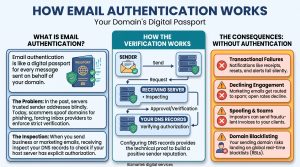
How to Set Up SPF, DKIM and DMARC for WordPress Sites Using cPanel

Email Authentication: Complete DNS Setup Guide for Better Delivery
How Emails Are Sent: A Simple Guide to Email Delivery

How to Start Email Marketing in Nigeria

How to Recover Abandoned Carts in Nigeria 2026

Email Marketing Services for E-commerce Brands in Nigeria
Email Marketing Automation for Real Estate Firms in Nigeria

Types of Emails for Your Email marketing
