Is Traditional Advertising Still Effective?


Key Highlights
- Get a real answer backed by current data, not just “it depends”
- See a striking Nigeria-specific finding: outdoor advertising actually outperforms online ads here in independent research
- Understand why measurability and effectiveness aren’t the same thing
- Learn how to decide between traditional, digital, or a blend of both for your specific business
Key Takeaways
- Traditional advertising hasn’t died, spending has flattened rather than collapsed, and some formats are performing better than they have in years
- An independent Nigerian study found out-of-home advertising is the second most effective medium overall, ahead of online advertising, behind only radio
- Digital advertising remains easier to measure, but easier to measure isn’t the same as more effective, especially for brand-building rather than immediate clicks
- Nigeria’s linguistic diversity (500+ languages) gives radio a genuine, hard-to-replicate targeting advantage for hyperlocal campaigns
- The strongest campaigns in 2026 generally combine both approaches rather than choosing one exclusively
If you’ve been told digital marketing has made traditional advertising obsolete, the data tells a more interesting story, particularly if you’re advertising in Nigeria specifically.

Ready To Scale Faster?
What Is Traditional Advertising?
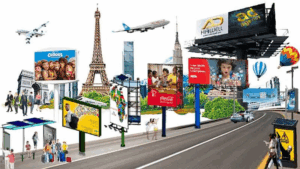
Traditional advertising covers any promotional channel that existed before the internet: billboards and other out-of-home (OOH) formats placed in high-traffic areas, print ads in newspapers and magazines, radio spots reaching local or regional listeners, television commercials, direct mail sent to physical addresses, and cold calling or telemarketing outreach. What these formats share is a physical or broadcast presence rather than a digital one, and a generally higher perceived trust among consumers who can see or hear the message directly rather than through an algorithm-mediated feed.
Is Traditional Advertising Still Effective in 2026?
Yes, though the honest answer is more nuanced than a simple yes or no. Traditional advertising’s share of total ad spend has been shrinking for years as digital channels have grown, but “shrinking share” isn’t the same as “stopped working.” Some traditional formats are genuinely performing well right now: out-of-home advertising in the US logged its eighteenth consecutive quarter of revenue growth through Q3 2025, and direct mail has reported strong returns even as digital ad fatigue becomes a more visible problem industry-wide.
That fatigue point matters more than it might seem. Harvard Business Review research has flagged a genuine shift in advertiser behavior: after years of steady decline, traditional ad spending saw an uptick, coinciding with growing frustration among consumers over intrusive, cluttered digital advertising. The suggestion isn’t that digital is failing, it’s that oversaturation in digital channels is making traditional formats relatively more valuable than they were five years ago, not because traditional got better, but because digital got more crowded.
Is Traditional Advertising Still Effective in Nigeria Specifically?
This is where the data gets genuinely surprising, and where most generic “is traditional advertising dead” content, written for US or European markets, simply doesn’t apply. An independent study conducted by GeoPoll for the Outdoor Advertising Association of Nigeria found that out-of-home advertising is Nigeria’s second most effective advertising medium overall, ranking behind only radio, and notably, ahead of online advertising. Over 80% of respondents in the study reported noticing billboard advertisements specifically.
Radio’s dominance in Nigeria isn’t a minor footnote either. Nigeria’s traditional radio advertising market continues generating meaningful revenue, and the country’s linguistic diversity, over 500 distinct languages spoken, gives radio a targeting advantage that’s genuinely difficult and expensive to replicate through digital channels alone: a business can reach a specific regional or linguistic audience through local-language radio programming in a way that requires far more sophisticated (and costly) targeting to achieve digitally.
This doesn’t mean digital doesn’t matter in Nigeria, it clearly does, and continues growing. But it does mean the common assumption that traditional advertising is simply less effective everywhere doesn’t hold up against Nigeria’s own research.
How Does Traditional Advertising Compare to Digital Advertising?
The most honest comparison isn’t “which performs better” in the abstract, it’s “which is designed to measure what.” Digital advertising’s biggest structural advantage is measurability: you can see exactly how many people clicked, converted, or abandoned a cart. Traditional advertising has always struggled here, a billboard might generate thousands of daily views, but connecting those views to an actual store visit or sale is inherently harder to trace.
That measurability gap has led many marketers to unintentionally conflate “easy to measure” with “actually more effective,” when the two aren’t the same thing. Traditional media tends to excel at brand-building, creating familiarity and recall over repeated exposure, while digital excels at capturing demand that already exists, someone who’s already decided they want something and is searching for where to buy it. A person might notice a billboard, hear a radio jingle, and later search for that business online, with the search ad getting credit as the “final” touchpoint even though the earlier traditional exposure is what built the initial interest.
Should You Choose Traditional or Digital Advertising for Your Business?
This depends heavily on your audience and objective, not a blanket rule. If your target audience skews older, is concentrated in a specific local area, or is genuinely reachable through radio or high-traffic physical locations, traditional formats remain a legitimate, often cost-effective choice. If your audience is younger, spends significant time on specific digital platforms, or you need precise, trackable performance data, digital channels make more sense as the primary investment.
For most Nigerian businesses, particularly those targeting a local market or an audience that includes older or less digitally-connected customers, a blended approach tends to outperform either channel alone: billboards and outdoor advertising build the broad local awareness that search and social ads then capture and convert. Businesses that write off traditional advertising entirely in the Nigerian market are working against what the actual local research shows, not with it.
How Bizmartek Helps With Traditional Advertising in Nigeria
Bizmartek offers traditional advertising services (billboards, radio, TV, and print) alongside digital marketing, built around the reality that in Nigeria specifically, the two work better combined than in isolation. If you’re weighing where to put your next campaign budget, it’s worth reading further into outdoor advertising strategies in Nigeria, what outdoor advertising (OOH) actually covers, or our broader look at how businesses get more customers offline in 2026.

Ready To Scale Faster?
Explore TRADITIONAL ADVERTISING Mastery

Traditional Advertising in Nigeria: How Businesses Can Get More Customers Offline in 2026

Why Do Nigerians Cut Holes in Billboards? The Science of Wind Resistance in Outdoor Ads
Billboard Advertising Services for Small Businesses in Nigeria