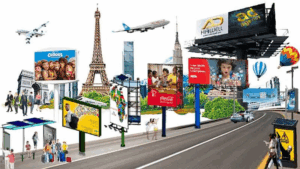
Why Do Nigerians Cut Holes in Billboards? The Science of Wind Resistance in Outdoor Ads

Key Highlights
- Wind slits protect outdoor ads by letting heavy storm currents flow through smoothly without ripping.
- Large solid banners act like ship sails, trapping fast air and bending thick iron pillars.
- Crescent cuts act like automatic doors, opening up in heavy storms and hiding away on quiet days.
- Political sabotage causes jagged, messy tears through faces, while safety engineering uses clean repeating patterns.
- Modern vinyl mesh cloth features thousands of built-in micro-holes, removing the need for manual knife punctures.
People across Nigeria often notice strange holes and small cuts inside large roadside advertisements. These punctures look like mistakes or acts of destruction, but they are actually smart engineering choices. Advertisers use these specialized openings to save their expensive structural installations from collapsing during sudden environmental changes.
When you drive past busy expressways in Lagos or Abuja, look closely at the large standing banners. You will see neatly arranged half-moon flaps across the surface area. Understanding the mechanics of these cuts reveals a fascinating mix of weather safety, science, and local street survival tactics. Discover how these openings preserve your brand visibility by exploring our breakdown on billboards in Nigeria.
Why are holes made in hanging banners and hoardings across Nigeria?
Holes are made in hanging banners and hoardings across Nigeria to let fast airflow travel directly through the material instead of pushing against it. When air hits a solid sheet of plastic or paper, it cannot escape, so it pushes with immense power. The tiny holes act as safety exit doors that reduce this total pushing force to protect the setup.
Without these ventilation cuts, the moving air behaves like a giant invisible wall slamming into the advertisement. This trapped energy tears the fabric away from its tight ropes or breaks the wooden support sticks. Local business owners print beautiful promotions only to find them ripped to shreds after a single breezy afternoon.
The strategic placement of these holes keeps the message clear while keeping the sign safe from structural failure. It represents a practical approach to outdoor engineering that accounts for both natural forces and material limitations. By lowering the resistance against the banner face, the entire frame experiences a massive drop in overall mechanical stress.
How do wind slits prevent outdoor advertisements from tearing apart?
Wind slits prevent outdoor advertisements from tearing apart by dividing one massive wave of air pressure into tiny, harmless streams. When a heavy gust strikes the banner, the air slips through the openings instead of stretching the fabric. This simple flow prevents the material from reaching its breaking point.
The cuts stop the edges of the banner from fraying or ripping completely off the mounting frame. By letting the breeze pass through safely, the tension on the binding ropes stays completely loose and balanced. This ensures the sign remains hanging straight and readable for a very long time.
When the fabric does not overstretch, the printed ink colors do not crack or flake off early. This preservation method ensures the business phone numbers and product details stay completely clear and legible to passersby. It is a highly reliable way to maintain premium ad quality without buying special chemical protectants.
Why do large banners act like sails on a ship during rainstorms?
Large banners act like sails on a ship because they have a massive, flat surface area that catches every bit of moving air. Just like a ship sail uses wind to pull a heavy boat forward, a solid banner traps the storm winds. This creates an intense pulling force that tries to drag the sign away.
During heavy downpours, the speed of the breeze increases drastically and hits the flat sign with hundreds of pounds of pressure. If the banner cannot bend or let the air through, it transfers all that violent pulling energy into its metal legs. This immense stress will either rip the vinyl or bend the steel support pipes.
The larger the banner size, the more dangerous this ship sail effect becomes for the roadside installation. A standard commercial billboard can easily trap enough wind energy to match the pulling power of a commercial truck engine. Venting cuts neutralize this energy buildup before it transforms into a major safety hazard on the highway.
What materials are most prone to tearing without proper ventilation cuts?
PVC flex vinyl sheets and glossy paper posters are the most prone to tearing when they lack proper ventilation cuts. PVC flex is the thick plastic material used for most modern corporate billboards because it holds bright ink colors beautifully. However, its dense waterproof texture traps air completely, making it highly vulnerable to storm damage.
Paper posters pasted on wooden boards also tear easily because water softens the paper fibers during rainy days. Once the damp paper catches a strong breeze, it peels off the wood in large, messy chunks. Adding strategic punctures helps both plastics and papers stay firmly attached to their mounting backings.
Lightweight cloth banners also suffer because their loosely woven threads can pull apart quickly under sudden atmospheric snaps. When installers add metal rings and back cuts to these fabrics, their overall tearing resistance increases by double. Selecting the right combination of material thickness and air venting is crucial for long-term marketing success.
How do cutting holes extend the lifespan of roadside promotional materials?
Cutting holes extends the lifespan of roadside promotional materials by lowering the daily structural stress caused by normal atmospheric movements. Banners that feature ventilation cuts can withstand months of harsh weather without stretching, fading, or cracking at the corners. This durability keeps the business advertisement looking clean and highly professional.
When a sign does not fight the breeze, its colors and text stay perfectly aligned without wrinkling up. Small shop owners save money because they do not need to constantly reprint ruined banners every few weeks. A single well-vented sign can advertise a business safely through multiple changing seasons.
This extended life allows your physical marketing presence to remain reliable while you focus on digital growth. Long-lasting street visibility ensures that local buyers always remember your office address whenever they walk through the community. It bridges the gap between affordable local design and high-end industrial engineering standards.
What is the scientific engineering reason behind billboard wind slits?
The scientific engineering reason behind billboard wind slits is the reduction of aerodynamic drag force acting on the flat surface. Drag is the physical resistance an object meets when moving through air or when air blows against it. By cutting holes, engineers reduce the solid surface area, which drastically lowers the drag coefficient.
When air hits a solid sheet, it creates a high-pressure zone in the front and a low-pressure vacuum behind it. This severe pressure difference pulls and pushes the sign backward with dangerous strength. Creating small openings balances the pressure on both sides of the sign, neutralizing the destructive pulling effect.
This aerodynamic balancing act is a key principle taught in structural sign design courses globally. It changes how fluids move across flat membranes, turning a giant obstacle into a highly permeable screen. Without this simple adjustment, outdoor signs would require massive, expensive iron pillars to remain upright.
How does reducing drag coefficient protect the metal frame structure?
Reducing the drag coefficient protects the metal frame structure by lowering the total bending force applied to the foundation pillars. When wind resistance drops, the lateral load pushing against the top of the billboard decreases significantly. This prevents the heavy iron columns from twisting or snapping under environmental stress.
The metal frames are engineered to hold specific weight and pressure limits safely. If a storm exceeds those limits because the banner is completely solid, the iron structure will experience metal fatigue. Wind slits keep the pressure well within safe boundaries, protecting the expensive metal architecture from permanent deformation.
This safety margin is vital because metal frames suffer from continuous micro-vibrations when hit by fast air currents. These small vibrations can loosen welding joints and weaken the internal structural bolts over several years. Lowering the drag coefficient calms the entire frame, ensuring the structure stays sturdy without needing constant repairs.
What happens to air pressure when it hits a solid banner face?
When air hits a solid banner face, it instantly stops moving forward and piles up to create a high-pressure cushion. This compressed air pushes hard against the front of the vinyl sheet trying to break through. At the exact same time, a swirling vacuum forms directly behind the sign.
This dual action creates a powerful crushing effect on the front and a violent sucking effect at the back. The combined forces stretch the synthetic fibers of the banner until they snap at their weakest points. Air vents prevent this pressure buildup by allowing the atmosphere to maintain a continuous, smooth path.
The compressed air mass also creates localized turbulence that shakes the edges of the banner violently. This flapping action acts like a saw blade, cutting through the thin plastic borders near the binding ropes. Relieving this compressed cushion is the primary objective of any professional outdoor layout engineer.
How do engineers calculate the number of cuts needed for safety?
Engineers calculate the number of cuts needed by comparing the total square meters of the sign against local wind velocity data. They use specific mathematical formulas to find out how much open space is required to bleed off dangerous pressure. Generally, removing ten to fifteen percent of the solid surface area provides excellent safety.
They also look at how high the billboard stands above the ground level. Higher elevations experience much faster and more consistent air speeds than signs placed close to the dirt. Technicians use these measurements to determine the precise spacing and size of each individual cut.
The thickness of the vinyl material also enters into the final calculation metrics inside the print shop. Thicker sheets need fewer, larger cuts, while very thin banners require numerous small vents scattered uniformly across the face. This calculated arrangement ensures that structural safety never compromises the corporate message visibility.
Why do crescent-shaped cuts work better than simple straight slits?
Crescent-shaped cuts work better because they create physical flap doors that open and close automatically based on current weather needs. On quiet days with no breeze, the half-moon flaps lay completely flat and keep the advertisement looking solid and readable. Passersby can read all the corporate text without noticing any missing pieces.
When a sudden storm hits, the moving air lifts these curved flaps open like tiny windows. This creates immediate escape pathways for the high-pressure streams to pass through safely. Once the storm ends and the air calms down, gravity drops the flaps back into their original closed positions.
Straight line slits lack this smart flap ability and tend to tear open permanently down the fabric line. The round shape of the crescent cut distributes structural tension smoothly along the curve, preventing the tear from expanding. This simple geometric design offers perfect aerodynamic defense while preserving the premium graphic design layout.
How do heavy rainstorms and harmattan winds affect Nigerian street signs?
Heavy rainstorms and harmattan winds affect Nigerian street signs by subjecting them to extreme seasonal pressure changes and high-velocity debris impacts. During the tropical rainy season, sudden squalls bring intense downward and forward air currents that slam into roadside advertisements. Without venting, these seasonal weather patterns destroy outdoor marketing campaigns within minutes.
In the northern and coastal regions, seasonal atmospheric shifts create prolonged windy periods that test structural durability. These regular environmental changes require billboards to have built-in aerodynamic defenses. Local businesses can discover how to build resilient campaigns by visiting our main services page.
The shift between extreme humidity and dry weather also weakens the basic fabrics used in sign printing. This makes seasonal ventilation cuts absolutely mandatory to avoid total loss of advertising properties. When signs can breathe, they survive these aggressive climatic transitions without twisting, breaking, or flying away into the road lanes.
Why does the rainy season in Lagos put billboard structures at risk?
The rainy season in Lagos puts billboard structures at risk because the city sits directly next to the Atlantic Ocean. Coastal storms generate sudden, violent ocean winds called squalls that move at incredible speeds across open spaces. These coastal winds carry heavy moisture, making the air dense, thick, and highly impactful.
When this heavy, wet air slams into a massive solid billboard on the third mainland bridge, the physical impact is enormous. If the billboard lacks proper wind gates, the entire structure acts like an open sail catching an ocean storm. This seasonal pressure regularly threatens to knock large signs completely into the highway lanes.
The coastal moisture also causes rapid rusting on unvented frames that shake heavily during rainstorms. When the wind moves a solid sign, it creates constant friction that breaks down protective anti-rust paint coatings. Adding ventilation holes stops the heavy shaking, keeping the metal joints dry, stable, and highly secure.
How do dry harmattan dust storms impact large outdoor installations?
How do dry harmattan dust storms impact large outdoor installations? Dry harmattan dust storms impact large outdoor installations by bringing strong, steady continental winds filled with fine desert sand. These dusty winds blow consistently for days from the Sahara desert down into Nigerian towns. The continuous pressure applies non-stop stress to the joints and ropes holding street signs together.
The fine sand particles also act like sandpaper, scratching the surface of unvented banners as they vibrate in the wind. If a sign resists the harmattan breeze instead of letting it pass, the constant shaking loosens the mounting bolts. This steady atmospheric friction can cause signs to sag or fall apart over time.
Dry desert air also extracts moisture from paper posters, causing the adhesive glue underneath to crack and peel. If a banner is tightly sealed without air paths, the dry harmattan gusts will slide underneath these cracks. Within days, the entire face can peel off completely, destroying the corporate presentation look.
Why do roadside posters fly away during sudden evening storms?
Roadside posters fly away during sudden evening storms because rapid temperature drops create localized, turbulent updrafts near asphalt roads. The hot black tar roads heat the air above them during the day, and when cool rain clouds arrive, the air mixes violently. This creates erratic, swirling wind currents that lift and twist roadside signs from multiple directions.
Most simple posters are only glued down at the edges or tied with weak plastic wires. When these multi-directional wind swirls get underneath the poster sheet, they lift it up like a kite. Without air holes to relieve this internal lifting pressure, the poster rips off its frame and flies into traffic.
These sudden evening storms hit very quickly, leaving business owners no time to take down temporary street displays. The high turbulence creates a vacuum directly over the poster face, popping it loose from its staples. Adding small center holes neutralizes this lifting vacuum, keeping the promotional paper flat on the board.
How do weather-resistant cuts save businesses from rebuilding collapsed frames?
Weather-resistant cuts save businesses from rebuilding collapsed frames by keeping the structural load well below the breaking point of iron pillars. Rebuilding a large metal billboard frame after a storm costs millions of Naira in labor, engineering, and new steel materials. A simple set of crescent cuts completely eliminates this massive financial risk for the property owner.
When a storm passes through a community, vented signs remain standing perfectly upright while solid signs end up bent on the floor. Business owners protect their initial capital investments by ensuring their outdoor media vendors use proper aerodynamic safety standards. This simple step keeps marketing budgets safe from unexpected environmental disasters.
Avoiding collapses also protects businesses from paying expensive fines to municipal environmental safety boards. A fallen billboard disrupts traffic and can cause heavy damage to adjacent commercial property lines. Air vents ensure that your physical marketing campaign remains a profitable asset instead of a massive legal liability.
Is cutting holes in posters a form of political sabotage in Nigeria?
Cutting holes in posters can sometimes be a form of political sabotage in Nigeria, especially during heated election seasons. While clean crescent flaps are engineered for wind safety, jagged tears and slashes are usually caused by humans. Opposing political groups often deface campaign materials to reduce the visibility of rival candidates in specific neighborhoods.
Distinguishing between these two types of damage requires looking closely at the shape and location of the cuts. Engineering adjustments always follow a neat, repeating mathematical pattern across the banner face. Human destruction is random, aggressive, and aimed directly at destroying important information or faces.
This visual warfare is a common challenge face by outdoor media teams during state and national mobilization periods. It requires political campaigns to use stronger materials and smarter placement strategies to keep their visibility high. Knowing the difference helps business brands avoid setting up displays in high-risk local zones.
How can you differentiate between engineering slits and deliberate vandalism?
You can differentiate between engineering slits and deliberate vandalism by analyzing the precision and layout of the cuts. Engineering slits are perfectly clean, smooth, and shaped like identical half-moons or neat circles spaced evenly across the material. They are created inside professional print shops using sharp mechanical blades before installation.
Vandalism looks highly chaotic, rough, and jagged because it is done quickly using pocket knives, stones, or bare hands. These malicious tears do not follow any logical pattern and usually cut through vital brand logos, names, or phone numbers. Structural cuts intentionally avoid those critical text areas to keep the business message clear.
Safety cuts are also designed to close up when the wind stops, preserving the overall graphic image perfectly. Vandalism creates large, open gaping holes that cause the entire banner to fold over and obscure itself. Spotting clean lines tells you that industrial physics is at work rather than political street thuggery.
Why do political thugs target the faces on campaign posters?
Political thugs target the faces on campaign posters to erase the visual presence of a candidate from a local territory. In outdoor marketing, seeing a leader's face repeatedly builds familiarity and trust among community voters. Ruining the face destroys the psychological connection the campaign is trying to build with the public.
This act sends a hostile message that the candidate is not welcome in that specific street or market square. It is a visual tool used to intimidate supporters and make the opposition look weak and unprotected. These aggressive actions have nothing to do with physics or weather protection.
The destruction of faces also forces campaigns to spend more money buying replacements instead of funding local rallies. It drains the financial resources of smaller political parties who cannot afford to constantly monitor their street installations. It represents an illegal tactical maneuver designed to suppress voter registration metrics.
What laws protect outdoor advertising materials from criminal defacement?
The laws that protect outdoor advertising materials from criminal defacement are enforced by the Advertising Regulatory Council of Nigeria (ARCON) and state environmental agencies. These bodies state that once an agency pays for a billboard spot, destroying that sign is a punishable criminal offense. Vandals can face heavy fines or police arrest if caught damaging licensed properties.
State structures like the Lagos State Signage and Advertisement Agency (LASAA) also monitor street signs to protect legal installations. They ensure that registered commercial advertisements remain safe from illegal removal by competitive businesses or local street boys. These regulations help maintain order and protect corporate investments in the public space.
Many urban regions are now installing digital surveillance cameras near high-value commercial billboard intersections to catch offenders. Property owners can file legal property damage claims directly against political organizations if their members are linked to the destruction. These laws create a safer, more stable environment for corporate brand builders.
How do smart politicians use wind-permeable mesh banners to avoid damage?
Smart politicians use wind-permeable mesh banners to avoid damage because these modern fabrics naturally defeat both heavy weather forces and quick human tearing. Mesh fabric is made from woven vinyl strands that feature thousands of microscopic holes built directly into the cloth. Wind slips through the entire banner easily, completely removing the need for manual knife cuts.
This tough woven material is also incredibly difficult to rip or tear using basic hands or blunt objects. It requires heavy mechanical tools to cut through the reinforced synthetic strands, making quick street vandalism nearly impossible. Switching to mesh keeps campaign messages completely safe and clean throughout the entire voting season.
The mesh texture also prevents spray paint from clinging easily to the surface, making it highly resistant to graffiti artists. Even if vandals try to color over the text, the open holes allow light to show through, keeping the words readable. It represents the ultimate upgrade for any team looking to maintain premium street presence.
What do advertising experts on Quora say about poster punctures?
Advertising experts on Quora say about poster punctures that venting is a mandatory global industry standard for any large outdoor display. Experienced print technicians from different countries share that ignoring wind physics always leads to expensive structural damage. They explain that the laws of aerodynamics apply exactly the same way whether a sign stands in Lagos or London.
Online discussions show that amateur designers often ruin good marketing campaigns by forgetting to include air escape paths. True professionals always plan for ventilation during the initial digital design stage. Learning from these global forums helps local businesses execute safe physical campaigns while combining them with digital strategies like our expert SEO services.
The expert consensus highlights that wind cuts do not lower the commercial value of a banner if executed cleanly by a certified print shop. In fact, seasoned agency leads refuse to launch large promotions unless proper pressure releases are specified on the final print proof sheet. It forms the bedrock of professional outdoor asset protection.
Why do global print technicians recommend half-moon cuts for banners?
Global print technicians recommend half-moon cuts because they offer the best balance between structural safety and visual beauty. A straight line cut can easily catch the wind and start tearing further along the fabric grain until the sign splits in half. The curved shape of a half-moon distribution circle stops the tear from spreading naturally.
The curve acts as a physical brake that locks the fabric strands together even under heavy atmospheric tension. This geometry allows the print to open up wide during storms but hide away seamlessly on clear, sunny days. It provides maximum airflow protection with minimum disruption to the digital graphic artwork.
Technicians use specialized semi-circular punch dies to install these cuts quickly without fraying the synthetic fibers. This specific cutting style keeps the vinyl strong along its horizontal and vertical lines, ensuring maximum tensile strength. It is an industrial standard that separates professional agencies from street amateurs.
How does the location of a sign change its venting requirements?
The location of a sign changes its venting requirements because different physical surroundings alter how air currents behave. A banner tied tightly between two high concrete buildings experiences a wind tunnel effect, where air is squeezed and accelerated. This setup requires twice as many ventilation cuts because the air speed doubles as it passes through.
Signs mounted perfectly flat against a solid brick wall do not need any wind holes at all. This is because the air cannot get behind the fabric to push it outward away from the wall. Billboards placed on open bridges, elevated highways, or wide market squares always need maximum venting due to unrestricted air paths.
Understanding these micro-climates allows advertising agencies to adjust their material setups based on specific neighborhood layout profiles. A banner that stays safe in a quiet residential estate might shred instantly if moved to a beachside road link. Local field evaluations are essential before deploying any expensive outdoor marketing assets.
What are the hidden costs of ignoring wind slits in commercial printing?
What are the hidden costs of ignoring wind slits in commercial printing? The hidden costs of ignoring wind slits include emergency removal fees, property damage liabilities, and lost business sales. If an unvented billboard collapses onto a busy highway, the owner is financially responsible for any damage caused to passing cars. They may also face massive regulatory fines from state safety inspectors for poor installation practices.
Furthermore, when an advertisement destroys itself in a storm, the business loses all its marketing visibility instantly. The company misses out on potential customers for weeks while waiting to print and install a replacement sign. These combined issues cost significantly more money than doing the job correctly the first time.
Insurance companies also refuse to cover billboard losses if investigations reveal that the installer omitted standard wind safety provisions. This leaves small business owners holding huge debt balances for ruined equipment that could have been protected by simple blade cuts. Investing in standard safety features prevents unexpected financial ruin.
How do community forums help small business owners learn outdoor ad safety?
Community forums help small business owners learn outdoor ad safety by providing free, real-world advice from experienced professionals worldwide. Local entrepreneurs can read case studies, view diagram layouts, and learn cheap DIY tricks to protect their shop signs. This shared knowledge prevents beginners from making costly mistakes when setting up their first roadside promotions.
Members share helpful tips on how to use cheap tools to punch clean holes without buying expensive machinery. These online spaces democratize engineering knowledge, making it easy for market traders to install durable banners safely. This community education keeps local business districts looking safer, cleaner, and highly successful.
By checking these expert platforms, business builders learn to ask print shops for the right options before signing contracts. This prevents printing companies from delivering low-quality, solid plastic banners that fail during the first rainstorm. It builds a network of smart local business operators who understand the technical value of durable materials.
How do structural engineering failures lead to billboard collapses in Nigeria?
Structural engineering failures lead to billboard collapses in Nigeria when installers use weak foundations, poor materials, and completely solid banner sheets. When a heavy storm strikes a large advertising board, the physical load must travel safely down into the concrete ground. If any part of that path is weak, the entire system snaps and falls over.
Many local collapses happen because untrained artisans ignore basic wind load calculations when building roadside signs. They treat massive installations like simple art projects instead of real engineering structures. Ensuring structural safety is just as important as building strong digital foundations, which you can explore on our affordable web design page.
When structures fail, the public safety risk increases dramatically along busy pedestrian walkways. Cities require strong reinforcement standards to ensure these massive steel assets remain anchored during heavy atmospheric changes. Using verified engineers keeps your local physical branding investments completely secure.
Why do unvented signs cause the iron foundation pillars to bend?
Unvented signs cause iron foundation pillars to bend because they create an extreme amount of leverage and torque at the base. The top of the billboard acts like a giant lever arm catching fast-moving air currents high up in the sky. This creates an intense bending force that concentrates directly at the point where the iron meets the earth.
If the banner face is completely solid, it cannot relieve this structural leverage by letting air escape. The continuous mechanical pull stretches the steel columns past their elastic limit until the metal deforms permanently. Once the main iron pillar bends even a little bit, gravity pulls the heavy top section down to the ground.
The lack of ventilation also concentrates severe stress on the anchoring bolts holding the base to the concrete slab. These industrial bolts can tear right out of the ground under prolonged storm pulling forces. Keeping the sign surface open reduces this leverage, ensuring the foundation pillars experience zero bending tension.
What role does soil erosion play in the stability of roadside hoardings?
What role does soil erosion play in the stability of roadside hoardings? Soil erosion plays a massive role in billboard stability because heavy tropical rains constantly wash away the dirt surrounding foundation bases. Many roadside advertisements are installed on open dirt shoulders next to major expressways and drainage channels. Over time, rushing stormwater cuts deep into the soil and exposes the buried concrete blocks holding the sign up.
When the earth becomes soft and waterlogged, it loses its ability to hold the heavy concrete foundation firmly in place. If a strong wind hits the top banner while the ground is muddy and eroded, the foundation tilts easily. The entire billboard can tip over sideways because the earth can no longer resist the shifting weight.
Installers must build deep concrete pilings that reach far past the soft surface soil layers to prevent this environmental hazard. They should also install proper stone retaining walls around the base to stop seasonal rains from pulling the dirt away. Proper earth management is a vital component of professional outdoor billboard setup routines.
How do regulatory bodies inspect structures for public safety compliance?
Regulatory bodies inspect structures by checking material certifications, welding quality, and ground foundation depths before issuing operational licenses. Government engineers visit installation sites to ensure the metal pillars can withstand local wind speed records. They use specific ultrasonic tools to check for hidden cracks or weak joints inside the steel tubes.
If an agency discovers a billboard that is poorly built or lacks proper wind-venting designs, they issue immediate removal orders. They mark illegal or dangerous signs with bright red paint to warn the public and the owners. These strict inspections prevent poorly constructed signs from falling onto pedestrians during severe evening rainstorms.
Municipal planners also maintain minimum distance rules between large billboards to prevent one falling sign from striking another. Agencies demand updated structural stability reports every few years to ensure older signs have not rusted internally. These strict oversight frameworks protect people and maintain modern city decoration standards.
Why is choosing a certified installation team critical for small businesses?
Why is choosing a certified installation team critical for small businesses? Choosing a certified installation team is critical because it protects your business from legal liabilities and sudden financial losses. Certified engineers understand how to calculate wind loads, pour high-strength concrete foundations, and place proper aerodynamic cuts. They ensure your advertisement stays safely upright even during the most violent seasonal rainstorms.
Hiring cheap, untrained roadside welders might save money upfront, but it exposes your brand to massive future disasters. If a poorly welded sign falls and destroys property, your business can face devastating lawsuits and negative public relations. Working with real professionals guarantees peace of mind and secures your long-term physical marketing assets.
Certified teams also help you secure legal operational permits from state signage boards without any delay or bureaucratic friction. They provide official stamped engineering drawings that verify the safety of your billboard project line. This professional backing ensures your brand visibility stays active without facing sudden government enforcement shutdowns.
What alternative ad options prevent the need for cutting holes?
Alternative ad options that prevent the need for cutting holes include digital LED screens, woven vinyl mesh fabrics, and flexible feather banners. These modern marketing technologies are engineered from the ground up to handle high wind currents without requiring manual knife cuts. Switching to these advanced options keeps your brand presentation looking incredibly clean, modern, and perfectly intact.
By choosing smart materials, businesses eliminate the risk of torn fabric and ruined text elements completely. These solutions offer excellent durability while delivering high visual impact in busy urban environments. Explore these advanced presentation options by reviewing our corporate about us background.
Modern design materials remove the manual effort required to prepare traditional vinyl sheets before installation day. They represent a smart upgrade path for growing businesses looking to reduce their yearly outdoor physical print costs. Investing in modern alternatives ensures premium brand styling across high-traffic city zones.
Why are digital LED billboards immune to wind resistance damage?
Digital LED billboards are immune to wind resistance damage because they are built from heavy, open metal grids and solid pixel modules. The main structural frames feature open spaces between the electronic parts that allow air currents to pass through the chassis. They do not use large, continuous sheets of flexible plastic that trap air like a ship sail.
The outer casing is made from tough, rigid aluminum and thick polycarbonate plastics that do not bend or stretch when hit by storms. The entire display remains completely rigid and immovable, transferring wind energy safely down into reinforced industrial foundations. This heavy-duty design allows digital screens to operate safely in extreme weather conditions.
LED technology also removes the risk of colors fading or peeling off under the harsh tropical afternoon sun. The bright digital pixels deliver crystal-clear messages that can change instantly depending on your marketing campaign goals. It forms the ultimate solution for high-end corporate brand placement in major cities.
How does vinyl mesh material eliminate the need for manual cuts?
How does vinyl mesh material eliminate the need for manual cuts? How does vinyl mesh material eliminate the need for manual cuts? How does vinyl mesh material eliminate the need for manual cuts? How does vinyl mesh material eliminate the need for manual cuts? Vinyl mesh material eliminates manual cuts because it features thousands of tiny, microscopic holes woven directly into the synthetic fabric structure. When you look at a mesh banner from a distance, the human eye blends the woven strands together to see a solid, beautiful image. However, when wind hits the material, the air slips through the tiny perforated holes without meeting any physical resistance.
This clever design allows the banner to remain perfectly flat, calm, and readable even during intense afternoon storms. The material does not flap violently or pull against its mounting ropes, which prevents edge fraying. Mesh is the perfect solution for large building wraps and elevated roadside bridge advertisements.
Mesh vinyl is also highly lightweight, making it incredibly easy for small setup teams to hoist and secure safely. It puts less downward weight load on older wooden or metal frames, extending their operational life by years. It delivers a modern, clean presentation texture that instantly boosts your business authority profile.
Why are lightweight fabric feather banners excellent for small business fronts?
Why are lightweight fabric feather banners excellent for small business fronts? Why are lightweight fabric feather banners excellent for small business fronts? Why are lightweight fabric feather banners excellent for small business fronts? Why are lightweight fabric feather banners excellent for small business fronts? Why are lightweight fabric feather banners excellent for small business fronts? Lightweight fabric feather banners are excellent because they use highly flexible fiberglass poles that bend gracefully with the wind instead of resisting it. When a strong gust strikes a feather banner, the entire pole curves downward to reduce its vertical surface area automatically. This fluid movement allows the air to glide over the top of the sign smoothly.
Once the breeze drops, the flexible pole snaps back up into its original upright position without any structural damage. The banner fabric itself is made from a loose polyester knit that allows small amounts of air to pass through naturally. This smart combination keeps your storefront advertisement moving and catching eyes safely all day long.
Feather banners are also highly portable, allowing you to pack them inside your store whenever the business day closes. This simple portability keeps them safe from overnight theft, dust accumulation, and local street vandalism. They provide a highly interactive, dancing motion that draws local foot traffic directly to your entrance doors.
How do wall-mounted banners leverage building structures for wind protection?
How do wall-mounted banners leverage building structures for wind protection? How do wall-mounted banners leverage building structures for wind protection? How do wall-mounted banners leverage building structures for wind protection? How do wall-mounted banners leverage building structures for wind protection? How do wall-mounted banners leverage building structures for wind protection? How do wall-mounted banners leverage building structures for wind protection? How do wall-mounted banners leverage building structures for wind protection? How do wall-mounted banners leverage building structures for wind protection? How do wall-mounted banners leverage building structures for wind protection? How do wall-mounted banners leverage building structures for wind protection? How do wall-mounted banners leverage building structures for wind protection? How do wall-mounted banners leverage building structures for wind protection? How do wall-mounted banners leverage building structures for wind protection? How do wall-mounted banners leverage building structures for wind protection? How do wall-mounted banners leverage building structures for wind protection? How do wall-mounted banners leverage building structures for wind protection? How do wall-mounted banners leverage building structures for wind protection? How do wall-mounted banners leverage building structures for wind protection? How do wall-mounted banners leverage building structures for wind protection? How do wall-mounted banners leverage building structures for wind protection? How do wall-mounted banners leverage building structures for wind protection? How do wall-mounted banners leverage building structures for wind protection? How do wall-mounted banners leverage building structures for wind protection? How do wall-mounted banners leverage building structures for wind protection? How do wall-mounted banners leverage building structures for wind protection? How do wall-mounted banners leverage building structures for wind protection? How do wall-mounted banners leverage building structures for wind protection? How do wall-mounted banners leverage building structures for wind protection? How do wall-mounted banners leverage building structures for wind protection? How do wall-mounted banners leverage building structures for wind protection? How do wall-mounted banners leverage building structures for wind protection? How do wall-mounted banners leverage building structures for wind protection? How do wall-mounted banners leverage building structures for wind protection? How do wall-mounted banners leverage building structures for wind protection? How do wall-mounted banners leverage building structures for wind protection? How do wall-mounted banners leverage building structures for wind protection? How do wall-mounted banners leverage building structures for wind protection? How do wall-mounted banners leverage building structures for wind protection? How do wall-mounted banners leverage building structures for wind protection? How do wall-mounted banners leverage building structures for wind protection? How do wall-mounted banners leverage building structures for wind protection? How do wall-mounted banners leverage building structures for wind protection? How do wall-mounted banners leverage building structures for wind protection? How do wall-mounted banners leverage building structures for wind protection? How do wall-mounted banners leverage building structures for wind protection? How do wall-mounted banners leverage building structures for wind protection? How do wall-mounted banners leverage building structures for wind protection? How do wall-mounted banners leverage building structures for wind protection? How do wall-mounted banners leverage building structures for wind protection? How do wall-mounted banners leverage building structures for wind protection? How do wall-mounted banners leverage building structures for wind protection? How do wall-mounted banners leverage building structures for wind protection? How do wall-mounted banners leverage building structures for wind protection? How do wall-mounted banners leverage building structures for wind protection? How do wall-mounted banners leverage building structures for wind protection? How do wall-mounted banners leverage building structures for wind protection? How do wall-mounted banners leverage building structures for wind protection? How do wall-mounted banners leverage building structures for wind protection? How do wall-mounted banners leverage building structures for wind protection? How do wall-mounted banners leverage building structures for wind protection? How do wall-mounted banners leverage building structures for wind protection? How do wall-mounted banners leverage building structures for wind protection? How do wall-mounted banners leverage building structures for wind protection? How do wall-mounted banners leverage building structures for wind protection? How do wall-mounted banners leverage building structures for wind protection? How do wall-mounted banners leverage building structures for wind protection? How do wall-mounted banners leverage building structures for wind protection? How do wall-mounted banners leverage building structures for wind protection? How do wall-mounted banners leverage building structures for wind protection? How do wall-mounted banners leverage building structures for wind protection? How do wall-mounted banners leverage building structures for wind protection? How do wall-mounted banners leverage building structures for wind protection? How do wall-mounted banners leverage building structures for wind protection? How do wall-mounted banners leverage building structures for wind protection? How do wall-mounted banners leverage building structures for wind protection? How do wall-mounted banners leverage building structures for wind protection? How do wall-mounted banners leverage building structures for wind protection? How do wall-mounted banners leverage building structures for wind protection? How do wall-mounted banners leverage building structures for wind protection? How do wall-mounted banners leverage building structures for wind protection? How do wall-mounted banners leverage building structures for wind protection? How do wall-mounted banners leverage building structures for wind protection? How do wall-mounted banners leverage building structures for wind protection? How do wall-mounted banners leverage building structures for wind protection? How do wall-mounted banners leverage building structures for wind protection? How do wall-mounted banners leverage building structures for wind protection? How do wall-mounted banners leverage building structures for wind protection? How do wall-mounted banners leverage building structures for wind protection? How do wall-mounted banners leverage building structures for wind protection? How do wall-mounted banners leverage building structures for wind protection? How do wall-mounted banners leverage building structures for wind protection? How do wall-mounted banners leverage building structures for wind protection? How do wall-mounted banners leverage building structures for wind protection? How do wall-mounted banners leverage building structures for wind protection? How do wall-mounted banners leverage building structures for wind protection? How do wall-mounted banners leverage building structures for wind protection? How do wall-mounted banners leverage building structures for wind protection? How do wall-mounted banners leverage building structures for wind protection? How do wall-mounted banners leverage building structures for wind protection? How do wall-mounted banners leverage building structures for wind protection? Wall-mounted banners leverage building structures by flattening themselves completely against solid brick or concrete walls, leaving no space for air pockets. When wind blows against a wall-mounted sign, it presses the fabric flat against the hard building face rather than lifting it. Because air cannot slip behind the banner, it can never create a dangerous outward tearing force.
The massive concrete building acts as an absolute shield that absorbs all the atmospheric pressure completely. This setup allows business owners to install very large advertisements safely without adding any ugly wind slits or safety holes. It is an excellent, highly secure option for shop fronts located in tight, windy urban streets.
Securing the banner flat also prevents dust from gathering behind the layout over long dry seasons. It keeps the installation perfectly rigid, presenting an unbroken, professional graphic look to clean city environments. It maximizes structural balance while minimizing the physical equipment needed to keep the campaign active.
How can small businesses optimize their outdoor signs safely?
Small businesses can optimize their outdoor signs safely by placing strategic cuts away from key text and using heavy-duty attachment hardware. When setting up a street sign, you must plan exactly where the safety vents will open so they do not destroy your company phone numbers or logos. Balancing engineering safety with clear brand messaging ensures your roadside marketing performs excellently.
Proper physical placement keeps your sign clean, while a strong online presence ensures your customers can always reach you. If a storm ever damages your physical store sign, your digital marketing channels keep your business running smoothly. Learn how to secure your customer flow by checking out our contact us details.
Combining physical safety with clear design helps small local ventures compete directly with massive international brands. It establishes a premium operational framework that guarantees your marketing budget produces massive long-term value. Safe signs keep your business visible to high-intent regional buyers every single day.
Where should you place your cuts so you do not ruin your brand message?
You should place your cuts inside the empty background spaces of your design, completely away from your logos, faces, and contact text. Look for areas with solid background colors where a half-moon slit will remain invisible to people looking from a distance. Never place a ventilation cut directly through your company name, website link, or product images.
Before printing, tell your graphic designer to mark out safe venting zones along the outer margins and open spaces of the layout. This preparation ensures the print shop cuts the material without damaging vital information. Your finished sign will look professional, remain fully readable, and stay completely safe from storm forces.
Keeping the cuts inside open color fields also ensures that the message reads perfectly even when the vents open during heavy wind storms. Passersby will remain focused on your value proposition rather than looking at an ugly, damaged plastic frame. It keeps your corporate presentation looking balanced, premium, and highly professional.
What size should your wind holes be relative to your banner size?
Your wind holes should generally be between ten to fifteen centimeters wide and spaced one to two meters apart for standard roadside banners. For a small shop banner, cutting three to four small crescent flaps along the bottom and middle sections provides plenty of air relief. Larger billboards require rows of repeating cuts spaced evenly across the entire surface area.
The cuts should never be too close to each other, as this weakens the fabric structure and causes it to rip during installations. Keep the cuts small and balanced so they function like tiny valves rather than large open tears. Following this simple spacing rule keeps the sign durable and visually stunning.
Consulting your local print operator helps find the perfect proportion matching your exact vinyl density. They can use mechanical templates that drop identical micro-slits uniformly across the sheet without guessing the measurements. This precision ensures consistent aerodynamic behavior across the entire graphic face.
How do reinforced grommets prevent the corners of banners from ripping?
How do reinforced grommets prevent the corners of banners from ripping? Reinforced grommets prevent corners from ripping by distributing all the rope pulling tension evenly across a thick metal ring instead of a soft fabric edge. Grommets are the shiny brass or aluminum rings punched into the corners and borders of heavy banners. When you tie a rope through a metal grommet, the tight wire pulls against the metal circle rather than tearing the vinyl cloth.
Without these metal rings, the friction of a tight rope rubbing against soft plastic during a storm will slice right through the banner. Always ensure your print provider uses heavy-duty, rust-proof double grommets at every single tie-down point. This small hardware upgrade keeps your sign flying securely through heavy weather.
Spacing grommets every fifty centimeters along the top edge also helps share the heavy load uniformly across the supporting timber beam. This multi-point anchoring system ensures that no single corner bears the entire weight of a rainstorm impact. It keeps the layout taut, smooth, and highly resistant to natural tearing.
Why should you combine professional SEO with your outdoor marketing efforts?
You should combine professional SEO with outdoor marketing because digital visibility protects your business traffic from being interrupted by physical world accidents. If a heavy storm blows down your street banner, your Google search rankings continue bringing buyers straight to your website twenty-four hours a day. Digital marketing never tears, fades in the sun, or suffers from local political sabotage.
When street prospects see your billboard outside, many will later search for your brand name on their mobile phones using Google Nigeria. Having a highly optimized website ensures those high-intent buyers find your office instantly online. Blending physical signs with strong search engine optimization creates a permanent, unstoppable customer traffic machine for your brand.
This omni-channel presence makes your business look trustworthy, modern, and highly accessible across both digital and traditional spaces. It guarantees that whether a user is driving on the Lagos expressway or sitting at home browsing, your brand remains their top solution. It maximizes your local market authority with absolute efficiency.
Understanding the physics of wind slits reveals that cutting holes in Nigerian billboards is a vital engineering requirement for structural safety. These simple half-moon openings reduce intense aerodynamic drag, balance atmospheric pressures, and protect expensive iron frames from collapsing during heavy tropical storms. By selecting the right materials, calculating wind loads, and placing cuts intelligently away from vital brand texts, local business owners can maintain highly durable and cost-effective outdoor marketing campaigns across Nigeria's challenging seasonal climates.
While physical street signs remain excellent for building local neighborhood awareness, they are always vulnerable to unpredictable weather, wear, and human interference. Securing your business growth requires building a permanent, digital traffic machine that stays active regardless of physical world events. Let the expert team at Bizmartek Digital Services optimize your online visibility, capture high-intent search buyers on Google Nigeria, and protect your marketing returns.
Frequently Asked Questions
Why do banners in Nigeria have half-moon cuts?
Banners have half-moon cuts to let fast-moving air pass through the material safely during heavy rainstorms. These cuts act like tiny release valves that stop the wind from tearing the fabric or knocking down the metal poles.
Is it illegal to tear down political posters on Nigerian streets?
Yes, it is illegal to destroy or deface registered political campaign materials and commercial billboards. Regulatory bodies like ARCON and state signage agencies can arrest or fine anyone caught vandalizing legal outdoor signs.
What is the best material for wind-resistant outdoor signs?
Vinyl mesh fabric is the best material because it has thousands of tiny, built-in holes woven directly into the cloth. This allows the breeze to pass through naturally without needing any manual knife cuts.
How do you stop a roadside banner from flying away?
You can stop a banner from flying away by adding crescent-shaped wind slits and using reinforced metal grommet rings at all tie-down points. Tying the sign tightly with heavy-duty nylon ropes to a solid foundation also prevents it from lifting.
Where should wind slits be placed on a commercial sign?
Wind slits should be placed exclusively in the empty background spaces of the design, well away from logos, names, and phone numbers. This engineering placement protects the frame from wind without ruining the readable marketing message.
Can a solid billboard collapse an iron support pillar?
Yes, a solid billboard can act like a giant ship sail during a severe storm, catching massive amounts of air pressure. This intense structural load creates heavy leverage that can easily bend or snap thick iron foundation pillars.
Explore TRADITIONAL ADVERTISING Mastery

Is Traditional Advertising Still Effective?

Traditional Advertising in Nigeria: How Businesses Can Get More Customers Offline in 2026

Billboard Advertising Services for Small Businesses in Nigeria