What Is Programmatic Advertising in Digital Marketing?


Introduction:
When I first heard the term “programmatic advertising” a few years ago, I was a bit confused. It sounded like something complicated, only for tech experts to understand. But let me assure you, as someone who’s worked in digital marketing for a while, programmatic advertising is far more accessible than it might seem—and it could revolutionize the way you run ads online.
So, what exactly is programmatic advertising, and why should you care about it in today’s digital marketing world? Let me break it down in a simple, straightforward way that even someone who’s new to digital ads can understand.
What is Programmatic Advertising?
Programmatic advertising is the automated process of buying and selling digital ad space through software, powered by algorithms and real-time data. Rather than relying on traditional ad buying methods (where you negotiate and purchase ad space directly from publishers), programmatic advertising uses machines to handle most of the buying, bidding, and placement of ads.
Imagine this: You’re a business owner wanting to place an ad on a popular website, but instead of contacting the website owner directly, you use a platform like Google Ads or The Trade Desk. This platform automatically matches your ad to the most relevant audience based on the data it collects, such as browsing behavior, location, and interests.
This process happens in real time, so ads are shown at the exact moment a user is most likely to engage, making programmatic advertising incredibly efficient.
Let’s help you set up you ads >>

How Does Programmatic Advertising Work?
Let’s dive into how the magic happens, step-by-step:
Audience Targeting:
With programmatic advertising, your ads don’t just reach random people. They are shown to a carefully targeted audience based on data such as age, gender, browsing history, and interests. This ensures you’re not wasting your ad budget on people who aren’t likely to be interested in your product or service.Real-Time Bidding (RTB):
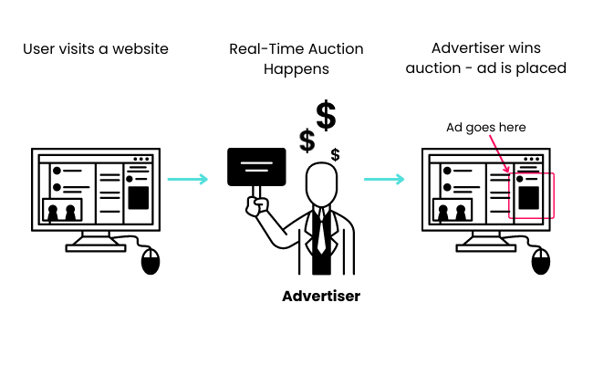
When you run a programmatic ad campaign, the bidding process is automated and happens in real-time. Let’s say you’re bidding for an ad spot on a website, and at that exact moment, someone who fits your target audience is visiting the site. Your ad gets placed because your bid was the best match for that user’s profile.Ad Exchanges:
An ad exchange is a platform where publishers (website owners) and advertisers meet. Think of it as an online auction house for ads. When you place a bid, the ad exchange decides if your bid is the best match for the available ad space.The Role of DSPs (Demand-Side Platforms) and SSPs (Supply-Side Platforms):
A DSP is where advertisers place their bids, while an SSP is where publishers put their ad space up for sale. These platforms work together to facilitate the buying and selling of ad impressions in real time.
Why Is Programmatic Advertising Important in Digital Marketing?
In the ever-evolving world of digital marketing, programmatic advertising is crucial for several reasons:
Efficiency and Automation:
By automating the ad-buying process, you save time and resources. No more manually negotiating deals or spending hours tracking down ad spaces. Everything is automated and optimized.Better Targeting:
With programmatic ads, your ads are served to the right people at the right time. For instance, if you sell workout gear, programmatic ads will target individuals who’ve shown interest in fitness-related topics, helping you reach the right audience with minimal waste.Cost-Effectiveness:
Since programmatic ads use data and algorithms to determine the best bids, you only pay for the impressions that are likely to lead to conversions. It’s a highly efficient way to manage your budget and see a better return on investment (ROI).Data-Driven Insights:
Programmatic advertising gives you access to tons of data—everything from how your ads are performing to how well your audience is engaging. This data helps you make informed decisions about your campaigns and optimize them in real-time.
A Real-Life Example:
Let me give you an example that will help you see programmatic advertising in action:
Let’s say you’re an online store selling handmade jewelry, and you want to target women aged 25-40 who are interested in fashion and accessories. Instead of running ads on every website, you use a programmatic platform like Google Ads or Facebook Ads.
Here’s how it plays out:
Your platform analyzes the data and identifies the best possible sites to place your ad (fashion blogs, online magazines, etc.).
The algorithm uses the browsing habits and interests of users who are most likely to buy jewelry.
The ad is placed automatically at the right time, on the right website, targeting women who are actively engaging with fashion-related content.
All of this happens in real-time, and the best part is that you’re only paying for the impressions that meet your criteria. This is why programmatic advertising is such a game-changer—it’s smarter, faster, and more effective.
The Benefits of Programmatic Advertising
Increased Reach:
With programmatic, you can extend your reach beyond just the big platforms like Google and Facebook. There are thousands of ad exchanges and networks that give you access to a broad audience across different websites and apps.Better Ad Formats:
Programmatic advertising is not limited to display ads. You can also run video ads, audio ads, and even native ads that blend seamlessly with the content of a website.Real-Time Optimization:
One of the key advantages of programmatic advertising is the ability to adjust campaigns in real-time. If an ad isn’t performing well, you can tweak your targeting or budget without waiting for approval from a third-party.Scalability:
If you’re running a campaign and want to scale it, programmatic makes it easy. You can instantly expand your reach without having to manually adjust each aspect of your campaign.

Common Types of Programmatic Advertising
Display Ads:
These are the most common form of programmatic ads. They appear as banners, pop-ups, or sidebars on websites.Video Ads:
Video ads are another popular format, especially on platforms like YouTube. Programmatic video ads ensure that the right people see your video content at the right time.Native Ads:
Native ads look and feel like the content on the page. This makes them less intrusive and more likely to engage users. They’re often used in content marketing and on social media platforms.Audio Ads:
With the rise of podcasts and streaming services like Spotify, audio ads are gaining popularity. Programmatic audio ads allow advertisers to target listeners based on their interests and behaviors.
Feature: Explore our google ads framework >>
How to Get Started with Programmatic Advertising
If you’re new to programmatic advertising, here’s how you can get started:
Choose the Right Platform:
Start by selecting a demand-side platform (DSP) that suits your needs. Some popular DSPs include Google Display & Video 360, The Trade Desk, and MediaMath.Define Your Target Audience:
Use the data at your disposal to define who you want to target. Whether it’s by age, location, or interests, the more specific you are, the better.Set Your Budget and Goals:
Set a realistic budget for your campaign and define your key performance indicators (KPIs). These could be click-through rates (CTR), conversions, or ROI.Create Engaging Ads:
Your ad creatives should be engaging and aligned with your target audience. Make sure the visuals and messaging are on point to drive interest and action.Monitor and Optimize:
Once your campaign is running, regularly check the performance and optimize it as needed. If something isn’t working, change your targeting or tweak your budget.
Conclusion:
In a nutshell, programmatic advertising is a game-changer for digital marketers. By automating the ad-buying process and using data to target the right audience, it allows you to create more effective, efficient campaigns that can scale with ease. Whether you’re a small business owner or a marketing expert, programmatic advertising offers a wealth of opportunities to connect with your audience and drive meaningful results.
Ready to dive into the world of programmatic ads? Start small, experiment with different ad formats and platforms, and watch your campaigns evolve over time.