
Introduction: Why Programmatic Advertising is Taking Over
Imagine this—you’re running an online ad campaign, but instead of manually buying ad space and negotiating prices, artificial intelligence (AI) does everything for you in real time. It identifies the perfect audience, bids on ad space in milliseconds, and optimizes your ad placements across multiple channels. This is the power of programmatic advertising.
Over the last decade, programmatic advertising has grown from a niche tactic to a dominant force in digital marketing, with billions of dollars spent annually. If you’re not using programmatic advertising, you’re likely leaving money on the table.
In this in-depth guide, I’ll break down everything you need to know about programmatic advertising, its benefits, challenges, and how to leverage it effectively for your business.
Ready to grow your business online?

What is Programmatic Advertising?
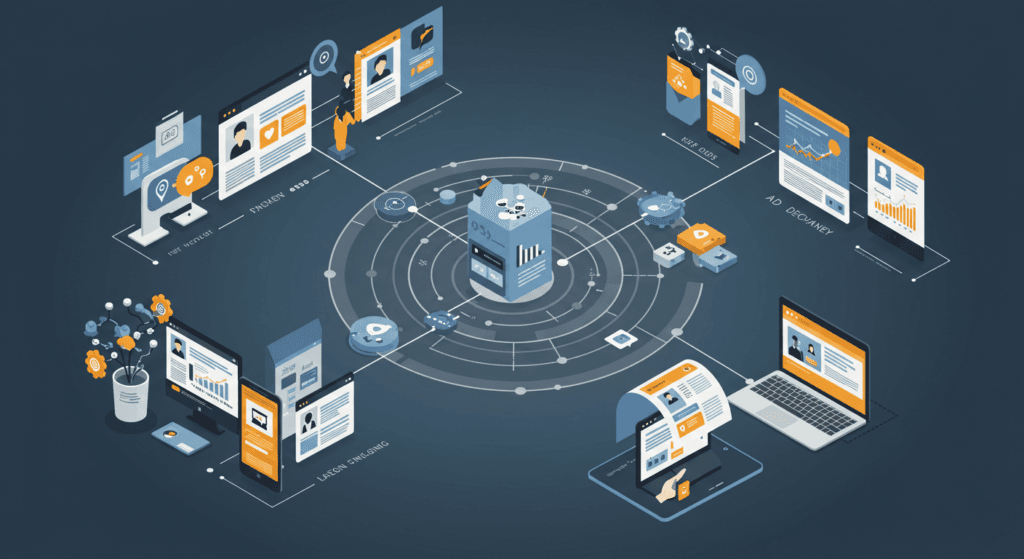
Programmatic advertising is the automated buying and selling of digital ad inventory using AI and real-time bidding (RTB). Unlike traditional ad buying, which involves negotiations and manual placements, programmatic advertising leverages algorithms to optimize campaigns efficiently.
How It Works
Advertiser Sets Goals – You define your target audience, budget, and campaign objectives.
Real-Time Bidding (RTB) – When a user visits a website, an ad exchange runs an auction in milliseconds.
AI-Driven Decision Making – The system selects the best ad based on the user’s profile.
Ad Placement – The winning ad is displayed almost instantly.
The Power of Programmatic Advertising: Why It’s a Game Changer
1. Precision Targeting
Programmatic advertising allows advertisers to target specific demographics, interests, behaviors, and even real-time contextual signals. With the phase-out of third-party cookies, advertisers are now turning to first-party data and AI-powered contextual targeting.
2. Efficiency & Cost-Effectiveness
Programmatic automates ad buying, reducing human error and manual negotiations, saving both time and money.
3. Real-Time Optimization
Unlike traditional advertising where you set an ad and hope for the best, programmatic constantly analyzes data and adjusts your campaign for maximum efficiency.
4. Cross-Channel Capabilities
Programmatic extends beyond just display ads. It integrates with multiple digital formats, including:
Display ads (banners, sidebars, pop-ups)
Video ads (YouTube, OTT, CTV)
Native advertising (sponsored content)
Audio ads (Spotify, podcasts)
DOOH (Digital Out-of-Home) advertising (billboards, in-store screens)

Types of Programmatic Advertising
1. Real-Time Bidding (RTB)
An open auction where advertisers bid for ad placements in real time.
2. Private Marketplaces (PMPs)
A more exclusive bidding process where only invited advertisers can compete for premium ad placements.
3. Programmatic Direct
A method where advertisers buy guaranteed ad space directly from publishers without an auction.
4. Preferred Deals
Advertisers negotiate private deals with publishers before inventory goes to open auction.
Programmatic Creative: Personalization at Scale
One of the biggest advantages of programmatic advertising is programmatic creative—the ability to dynamically adjust ad creatives based on real-time data. This includes:
Dynamic Creative Optimization (DCO) – Automatically personalizing ads based on user behavior, location, and demographics.
Responsive Display Ads – Adjusting ad sizes and formats dynamically for different placements.
Sequential Messaging – Serving tailored messages at different stages of the customer journey.
With AI-driven programmatic creative, advertisers can deliver hyper-relevant ads that boost engagement and conversions.
Challenges in Programmatic Advertising
While programmatic offers many advantages, it also comes with some challenges:
1. Ad Fraud & Transparency Issues
Click fraud and bot-driven impressions cost advertisers billions annually. To mitigate this, advertisers should use ad verification tools like DoubleVerify, Moat, and Integral Ad Science (IAS) to ensure ads are seen by real people.
2. Privacy Regulations
With GDPR, CCPA, and the decline of third-party cookies, marketers must shift to privacy-friendly targeting methods like first-party data and contextual advertising.
3. Brand Safety
Ensuring your ads don’t appear next to inappropriate content is crucial. Using brand safety tools like IAS and Google Ads’ brand suitability controls can help protect your brand.

Best Practices for Successful Programmatic Advertising
1. Leverage First-Party Data
Use your own customer data for more precise targeting.
2. Implement AI & Machine Learning
AI can optimize ad placements and predict user behavior in real time.
3. Ensure Ad Viewability
Work with trusted publishers and use ad verification tools.
4. Optimize Creatives
Use engaging visuals, personalized messaging, and A/B testing.
5. Monitor & Adjust Campaigns
Regularly analyze your campaign’s performance metrics and adjust bidding strategies.
Future Trends in Programmatic Advertising
1. AI-Powered Ad Buying
Machine learning algorithms are becoming more sophisticated, leading to better predictive modeling and campaign automation.
2. Cookieless Targeting
With third-party cookies being phased out, contextual targeting, first-party data, and Google’s Topics API are becoming the go-to solutions.
3. CTV & Audio Programmatic Ads
More advertisers are investing in Connected TV (CTV), podcast, and in-game advertising.
4. 5G & IoT Integration
5G will make real-time, hyper-personalized advertising a reality.
FAQs
Final Thoughts
Programmatic advertising is reshaping the digital marketing landscape. It offers unparalleled precision, automation, and scalability, making it a must-have strategy for businesses looking to maximize their ad spend.
As AI advances and privacy regulations evolve, advertisers who adapt early will stay ahead of the competition. Whether you’re a small business or a large corporation, embracing programmatic now will set you up for long-term success.